The Ayushman Bharat Pradhan Mantri Jan Arogya Yojana, widely known as PM-JAY, stands as one of the most revolutionary public healthcare initiatives globally. Launched by the Government of India, this flagship scheme was designed to fulfill the vision of Universal Health Coverage. It fundamentally addresses the severe financial distress that millions of low-income Indian families experience when faced with medical emergencies. Before this initiative, secondary and tertiary healthcare expenses frequently drove vulnerable households into deep debt or absolute poverty. By introducing a robust financial safety net, the government has fundamentally altered how healthcare is accessed by marginalized citizens across the country.
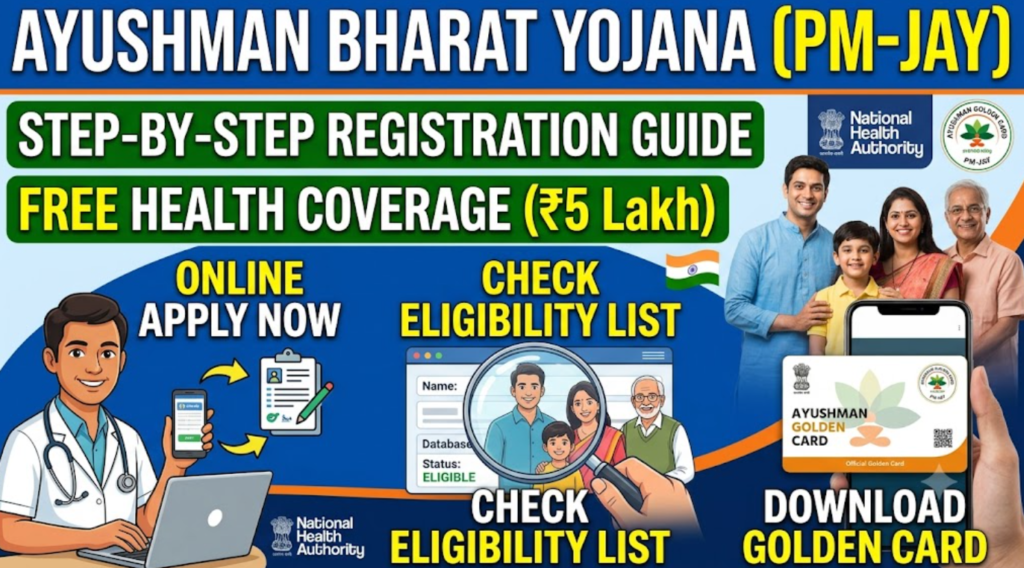
The core philosophy behind this national health protection mission is to transition from a segmented approach to a comprehensive, need-based healthcare service delivery system. The scheme is entirely government-funded, with the cost shared strategically between the Central and State governments. It caters directly to the bottom 40% of India’s population, identifying beneficiaries using transparent demographic data rather than discretionary lists. As medical costs continue to rise, this scheme serves as an essential buffer, ensuring that premium medical treatments are no longer an exclusive privilege of the wealthy but a basic right available to every citizen who qualifies under the established socio-economic criteria.
Comprehensive Overview of PM-JAY
To understand the immense scale of this health mission, it is useful to look at its core structural components. The scheme provides a substantial financial cover of up to ₹5 lakh per family every year. This coverage applies to secondary and tertiary care hospitalizations, which typically involve complex surgeries, long-term treatments, and specialized medical procedures. The program operates on a completely cashless and paperless framework, meaning that a registered beneficiary does not have to pay anything out of pocket at the point of care. Below is a detailed summary outlining the crucial administrative parameters of the national healthcare program.
| Feature Details | Administrative Information |
| Scheme Name | Ayushman Bharat Pradhan Mantri Jan Arogya Yojana (AB-PMJAY) |
| Funding Source | Fully funded by the Central and State Governments (60:40 ratio for most states) |
| Coverage Limit | ₹5,00,000 per family per year on a family floater basis |
| Target Audience | Over 12 crore poor, vulnerable families (approx. 55 crore individual citizens) |
| Expansion Update | All senior citizens aged 70 years and above are now eligible, regardless of income |
| Hospital Network | Over 30,000 public and private empanelled hospitals nationwide |
| Official Website | beneficiary.nha.gov.in / pmjay.gov.in |
This system eliminates intermediate processing and gives immediate medical access to eligible individuals through the distribution of a dedicated e-health identity document. The national network ensures that an eligible individual from any state can easily travel and access treatments seamlessly anywhere in the country without administrative friction.
Key Benefits and Financial Cover Provided
The financial shield provided by this initiative covers a vast array of expenses that can otherwise exhaust a family’s life savings within days. Unlike standard commercial insurance plans that feature complex clauses, this government policy simplifies benefits to ensure absolute transparency for rural and urban workers.
- Zero Waiting Period: All pre-existing medical conditions and chronic illnesses are completely covered from the very first day an individual obtains their digital card.
- No Family Restraints: There is absolutely no cap on the family size, age of members, or gender distribution within an eligible household.
- Pre-Hospitalization Expenses: The financial coverage includes all diagnostic tests, doctor consultations, and medicines up to 3 days before a patient is officially admitted.
- Post-Hospitalization Care: Medical costs, follow-up tests, and prescribed pharmaceutical supplies are covered for up to 15 days following the patient’s formal discharge.
- Comprehensive Care Packages: The package naturally incorporates intensive care unit (ICU) charges, nursing fees, surgical implants, ward accommodation, and daily food provisions for the admitted patient.
By eliminating financial barriers, the program gives underprivileged citizens the confidence to seek timely medical intervention for critical symptoms, drastically reducing mortality rates associated with delayed treatment.
Eligibility Criteria for Rural Families
The selection process for beneficiaries in rural regions is based entirely on the structural and financial deprivation categories mapped out during the Socio-Economic Caste Census. The system focuses on identifying households facing systemic hardships.
- Housing Status: Families living in temporary, single-room shelters with mud walls and thatched roofs (kucha houses).
- Adult Demographics: Households that lack any adult member between the ages of 16 and 59 years to serve as primary support.
- Female-Led Households: Families with no adult male member within the 16 to 59 age bracket, where a female member manages the household.
- Specially-Abled Support: Households containing an individual with physical or mental disabilities that lack any able-bodied adult member.
- Social Categories: All rural households belonging to Scheduled Caste (SC) and Scheduled Tribe (ST) communities.
- Livelihood Status: Landless households that earn their primary source of sustenance through manual, casual, or agricultural labor.
Rural identification is automatic if a household satisfies any of these criteria. This ensures that remote communities do not have to struggle through complex paperwork or bureaucratic red tape just to establish their initial eligibility.
Eligibility Criteria for Urban Families
For urban populations, eligibility is strictly tied to specific occupational vulnerabilities and professional lines of work. The urban poor frequently live in informal settlements and work in unorganized sectors without employer-provided medical benefits.
- Street Vendors and Hawkers: Individuals who make a living selling goods, food items, or daily utilities on public streets and pavements.
- Domestic Help: Housekeepers, cleaning staff, and domestic workers employed in residential sectors.
- Construction Workers: Laborers, masons, painters, plumbers, and welding operators working on infrastructure sites.
- Transport Operators: Auto-rickshaw drivers, manual rickshaw pullers, truck conductors, and delivery personnel.
- Sanitation Staff: Sweepers, garbage collectors, ragpickers, and sewage maintenance workers.
- Artisans and Tailors: Small-scale weavers, home-based tailors, cobblers, and traditional craftsmen working in small workshops.
- Security Personnel: Security guards, caretakers, and office peons drawing daily or weekly wages.
These specific occupational groupings ensure that the urban labor pool receives adequate health coverage, protecting them from structural poverty when unexpected injuries or workplace health hazards occur.
Who is Excluded from the Scheme?
To maintain the integrity of this welfare scheme and ensure that resources are directed only to the most vulnerable, the government has set clear exclusion rules. Households possessing certain luxury assets or steady institutional income streams are omitted from the target beneficiary pool.
- Motorized Vehicles: Any household owning a motorized two-wheeler, three-wheeler, four-wheeler, or heavy agricultural tractor.
- Mechanized Equipment: Families that own mechanized fishing boats or heavy agricultural machinery.
- Institutional Credit: Households possessing an active Kisan Credit Card (KCC) with a credit limit exceeding ₹50,000.
- Government Employment: Any family where at least one member is a regular, full-time employee of a local body, state government, or central government agency.
- Income Tax Payers: Households where family members are registered income tax payers or professional service providers.
- Corporate Enterprises: Individuals running registered commercial enterprises outside the unorganized labor sector.
- Land Ownership: Rural families owning more than 5 acres of irrigated agricultural land with reliable tube-well facilities.
These transparent filters stop individuals with sufficient financial means from consuming resources meant for underserved populations.
Critical Diseases and Medical Treatments Covered
The scheme incorporates an extensive list of approximately 1,929 specialized medical procedures and health packages. It covers specialized medical interventions that would normally cost lakhs in private healthcare settings.
- Oncology Services: Comprehensive treatment for various forms of cancer, including chemotherapy, radiation therapy, and complex surgical tumor removals.
- Cardiology and Cardiovascular Surgery: Coronary artery bypass grafting (CABG), heart valve repairs, pacemaker implantations, and angioplasty.
- Neurosurgery: Complex surgical procedures dealing with the brain, spinal column, and central nervous system injuries.
- Orthopedics: Total hip replacements, knee replacements, complex fracture fixations, and bone graft surgeries.
- Urology and Nephrology: Kidney failure management, regular dialysis sessions, and surgical removals of kidney stones.
- Pediatric Care: Specialized medical and surgical procedures tailored for newborns, infants, and young children suffering from congenital defects.
This massive treatment portfolio ensures that beneficiaries can get advanced treatment for life-threatening conditions without worrying about the cost.
Step-by-Step Guide to Check Eligibility Online
Checking eligibility does not require long queues at government offices. The National Health Authority provides a smooth digital portal accessible from any smartphone or computer.
- Access the Official Portal: Open an internet browser and navigate directly to the official digital link at
beneficiary.nha.gov.in. - Enter Mobile Number: On the homepage, find the login section, enter an active 10-digit mobile number, and select your appropriate user type.
- Generate One-Time Password: Click on the verification option to receive a secure OTP via text message on your phone.
- Input OTP Details: Carefully enter the received numeric code into the verification box along with the security captcha text displayed on screen.
- Select State and Scheme: Choose your state from the drop-down menu and select the PM-JAY scheme to filter regional databases.
- Choose Search Parameter: You can search using your Aadhaar Number, Ration Card (Family ID), Name, or Location (Rural/Urban).
- Analyze Search Results: Click the search button. If your family is listed, the screen will display individual names along with their card generation status.
Required Documents for Application and Verification
Having the right documents ready makes validation smooth and prevents administrative delays at common service counters or hospital help desks.
- Aadhaar Card: This serves as the primary document for biometric verification and identity mapping across the central system.
- Family Identity Proof: A valid Ration Card, National Food Security Card, or an official family composition certificate issued by a state authority.
- Residential Proof: An active voter identity card, electricity bill, or local residency document verifying current living status.
- Income Certificate: An official income certificate proving the household falls within acceptable economic boundaries (useful for specific state-sponsored extensions).
- Caste Documentation: A formal SC/ST certificate if applying under specific social criteria to secure priority access.
- Age Validation Proof: A birth certificate or school leaving document (specifically mandatory for senior citizens over 70 validating eligibility for the Ayushman Vay Vandana Card).
Ensuring these documents are up-to-date helps smooth the digital e-KYC process, allowing local operators to instantly approve your application.
How to Apply and Get Ayushman Card Online and Offline
The process of securing an active Ayushman Card (the Golden Card) involves straightforward digital validation steps designed for both tech-savvy users and individuals who need assistance.
- Online Self-Registration Route: Log in to the beneficiary portal using an Aadhaar-linked mobile number. Once you locate your name in the eligibility database, click on the “Action” tab to initiate e-KYC. Verify identity using an Aadhaar OTP or facial recognition via the mobile application. Once approved, the card updates to a green “Verified” status, allowing you to download the digital PDF instantly.
- Assisted Offline Route via CSC: If you face biometric mismatch issues or lack regular internet access, visit the nearest government-authorized Common Service Centre (CSC). Present your Aadhaar and Ration Card to the operator. They will complete live biometric fingerprint scanning using their authentication terminals.
- Empanelled Hospital Help Desk Route: You can also walk directly into any government hospital or empanelled private clinic. Head directly to the Ayushman Bharat assistance counter, where specialized personnel will verify your documentation and process the card on the spot.
Cashless Hospitalization Process and Empaneled Hospitals
Availing yourself of treatment under this program involves zero cash transactions, ensuring that families do not have to deposit advance payments during emergencies.
- Locating an Empanelled Hospital: Beneficiaries can use the official web locator tool to view all public and private medical facilities in their area authorized to handle PM-JAY packages.
- Visiting the Ayushman Counter: Upon arriving at the hospital for treatment, locate the prominently marked Ayushman Bharat kiosk before completing admission procedures.
- Identity Authentication: Present your digital Ayushman Card or physical card along with an Aadhaar card for validation.
- Pre-Authorization Request: The hospital’s internal team will review the diagnosis and upload an electronic pre-authorization request directly to the state health agency portal, detailing the required surgical or medical package.
- Approval and Cashless Treatment: Once approved, the medical team administers all surgeries, diagnostic tests, and medications without charging the patient. The hospital bills the government directly for the predefined package costs upon discharge.
Role of Ayushman Mitra in Facilitating Patients
The Ayushman Mitra network serves as the operational backbone of the scheme, acting as a supportive link between patients and hospital staff. These dedicated representatives are stationed inside every empanelled hospital to guide families through the process.
- Initial Patient Guidance: They welcome beneficiaries at the entry desks, checking their digital cards to ensure their account is active.
- Document Verification: They assist families in scanning and uploading relevant identity documents to prevent administrative delays.
- Liaison with Doctors: They coordinate directly with medical practitioners to match the diagnosis with the correct government-approved treatment package code.
- Systemic Pre-Authorization: They handle the online portal entry for pre-authorization requests, tracking state approvals so surgeries can proceed without delay.
- Discharge and Grievance Support: They manage the discharge summary upload, ensuring patients receive their 15-day take-home medication allotment without out-of-pocket costs.
How to File a Grievance or Track Status
If a beneficiary encounters an issue, such as a hospital refusing treatment or demanding cash payments, the National Health Authority provides clear channels for recourse.
- Online Grievance Registration: Visit the official grievance tracking portal at
grievance.pmjay.gov.in. Click on the registration option and select the PM-JAY category. - Detailing the Issue: Fill out the electronic form with your Ayushman card details, the name of the problematic hospital, and a precise description of the issue. You can upload receipts or written refusals as supporting evidence.
- Instant Reference Generation: Upon submission, the portal generates a unique Grievance Acknowledgement Number to help you track your case online.
- Central Helpline Route: Alternatively, call the toll-free helpline at
14555or1800-111-565. Operators are available 24/7 to log formal complaints and redirect them to regional grievance committees for quick resolution.
Important Links and Official PDF Notifications
For authentic data updates, registration procedures, and detailed official guidelines, visitors should rely only on authorized government web addresses.
- Official Beneficiary Login and Registration Portal:
beneficiary.nha.gov.in - National Health Authority Core Web Domain:
pmjay.gov.in - Ayushman Bharat Digital Mission (ABDM) Dashboard:
abdm.gov.in - National Grievance Redressal System Link:
grievance.pmjay.gov.in - Official Operational Guidelines Document:
ayushmanbharat.haryana.gov.in/policy-guidelines/
Using these official portals ensures you avoid fraudulent intermediaries and get direct access to free healthcare benefits.
Frequently Asked Questions Regarding the Scheme
Is there any fee to register or download the card?
No, the entire registration process, biometric e-KYC validation, and card download are completely free of cost across all authorized portals and centers.
Can a family member get treatment if their name is missing from the card?
Treatment is only accessible to individuals whose specific names are validated and visible within the official family unit on the portal. Missing members must be added via a Ration Card update.
What is the maximum age limit to benefit from this healthcare program?
There is no age limit for the standard scheme. Additionally, a new update extends a dedicated ₹5 lakh cover to all senior citizens aged 70 and above, regardless of family income.
Are outpatient department (OPD) expenses covered?
No, routine outdoor patient consultations, general check-ups, and minor pharmacy bills that do not lead to formal hospital admission are excluded from the scope of coverage.
Can I use my card in a different state from where it was issued?
Yes, the card features nationwide portability, allowing you to access cashless medical treatments at any empanelled hospital across India.
What happens if the total treatment cost exceeds ₹5 lakh in a year?
The scheme covers up to ₹5 lakh per family per year. Any medical expenses incurred beyond this threshold must be managed by the family or through supplementary state-specific relief funds.
Are cosmetic surgeries or fertility treatments included in the packages?
No, purely cosmetic enhancements, plastic surgeries not caused by accidents, drug rehabilitation programs, and fertility treatments are strictly excluded.
How do I find out which private hospitals near me accept the card?
You can view the complete, updated directory of local public and private hospitals by using the search tool on the official website at pmjay.gov.in.
Can I benefit from the scheme if I already have a private insurance policy?
Yes, eligible families can maintain private health insurance alongside this scheme, providing an extra financial buffer during severe medical events.
How long does it take for an offline card application to get approved?
Once biometric verification is completed at a Common Service Centre, approvals generally clear within the same day, provided your identity documents match perfectly.