The Pradhan Mantri Awas Yojana Gramin (PMAY-G) represents one of India’s most significant rural housing initiatives, designed to fulfill the vision of “Housing for All” across the nation’s villages and rural areas. Launched on 20th November 2016, this flagship scheme by the Ministry of Rural Development aims to provide pucca (permanent) houses with essential amenities to eligible rural households who either lack a home or reside in kutcha (temporary) dwellings .
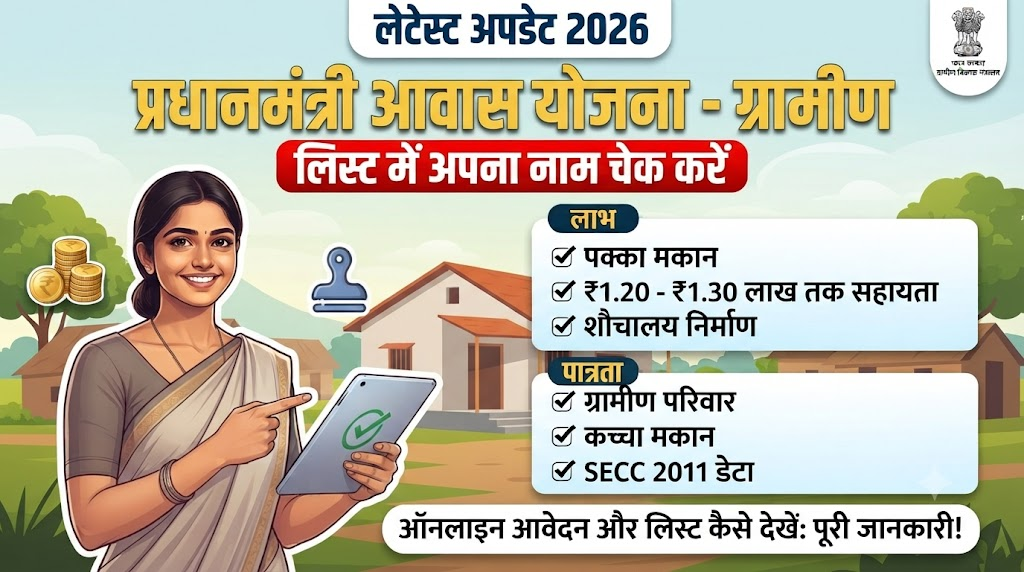
The scheme traces its origins to the earlier Indira Awas Yojana (IAY), which was restructured and renamed as PMAY-G in 2016 to expand coverage and improve implementation efficiency . The government initially targeted the construction of 2.95 crore houses during the period from 2016-17 to 2023-24, and remarkably, all these houses have been sanctioned with 2.68 crore houses already completed as of December 2024 .
The scheme’s success has led to its extension for an additional five years (2024-25 to 2028-29), with a new target of constructing 2 crore more houses for rural families. This extension, approved with a total outlay of Rs 3,06,137 crore, demonstrates the government’s continued commitment to addressing rural housing needs, particularly for economically weaker sections, Scheduled Castes, Scheduled Tribes, and other marginalized communities .
PMAY-G Scheme Overview and Key Statistics
The PMAY-G scheme operates with clear objectives, defined financial structures, and measurable targets. Understanding these parameters is essential for both beneficiaries and stakeholders involved in implementation.
PMAY-G Scheme Overview Table:
| Particular | Details |
|---|---|
| Scheme Name | Pradhan Mantri Awas Yojana Gramin (PMAY-G) |
| Launch Date | 20th November 2016 |
| Previous Name | Indira Awas Yojana (IAY) |
| Implementing Ministry | Ministry of Rural Development, Government of India |
| Initial Target (2016-2024) | 2.95 crore houses |
| Extension Target (2024-2029) | 2 crore additional houses |
| Total Budget Outlay (2024-29) | Rs 3,06,137 crore |
| FY 2024-25 Allocation | Rs 54,500 crore |
| Financial Assistance (Plain Areas) | Rs 1.20 lakh per house |
| Financial Assistance (Hilly/NER) | Rs 1.30 lakh per house |
| Toilet Construction Assistance | Rs 12,000 (convergence with SBM-G) |
| MGNREGS Wage Support | 90-95 person days of unskilled employment |
Progress as of December 2024:
- Houses Sanctioned (2016-2024 target): 2.95 crore
- Houses Completed: 2.68 crore
- FY 2024-25 Allocation Target: 40 lakh houses
- Sanctions Issued (FY 2024-25): 27.63 lakh houses
State-wise Special Allocations:
- Uttar Pradesh received additional allocation of 1,44,220 houses for FY 2023-24 following the Chief Minister’s request to the Ministry of Rural Development
- At least 60% of targets must be earmarked for SC/ST categories subject to availability in the housing database
Financial Implementation Features:
- Cost-sharing ratio of 60:40 between Centre and States in plain areas
- Cost-sharing ratio of 90:10 in North Eastern States, Himalayan States, and Union Territories of Jammu & Kashmir and Ladakh
- 100% Central funding for other Union Territories
Eligibility Criteria for PMAY-G Beneficiaries
The eligibility framework for PMAY-G is comprehensive, designed to ensure that assistance reaches the most deserving rural households. Beneficiary identification is primarily based on the Socio-Economic Caste Census (SECC) 2011 data, supplemented by the Awaas+ 2018 survey, with provisions for updating through the Awaas+ 2024 Mobile App .
Primary Eligibility Conditions:
The following households are eligible for PMAY-G benefits:
- Families that are houseless or landless
- Families living in zero, one, or two-room houses with kutcha walls and kutcha roofs
- Households without an adult male member between 16-59 years of age
- Families without a literate adult above 25 years
- Households with a disabled member
- Families dependent on alms or living in extreme poverty
- Primitive Tribal Groups
- Legally released bonded laborers
- Manual scavengers
- Scheduled Castes and Scheduled Tribes households
Exclusion Criteria (Ineligible Households):
The following categories are automatically excluded from PMAY-G benefits:
- Families owning a motorized vehicle (car, jeep, tractor, or agricultural equipment)
- Households with a Kisan Credit Card (KCC) limit of Rs 50,000 or more
- Any family member employed in government service with monthly income exceeding Rs 10,000
- Households paying income tax or professional tax
- Families owning a refrigerator, landline phone connection, or paying property tax
- Households already owning a pucca house anywhere in India
Prioritization Framework:
- Highest priority given to homeless households
- Families with zero rooms given preference over those with one or two rooms
- Households with kutcha walls prioritized over those with kutcha roofs
- SC/ST and minority households receive priority allocation
Awaas+ 2024 Survey:
The government has launched the Awaas+ 2024 Mobile App for conducting fresh surveys to identify additional eligible rural households using modified exclusion criteria. This self-survey process uses Aadhaar-based face authentication, making the identification process more accessible and transparent .
How to Check PMAY-G Gramin Beneficiary List 2023-24
Accessing the PMAY-G Gramin beneficiary list is crucial for applicants to confirm their selection and track their application status. The government has established multiple methods for checking beneficiary details, ensuring accessibility for rural populations with varying levels of digital literacy.
Method 1: Check via rhreporting.nic.in Portal (AwaasSoft)
This is the primary method for checking the PMAY-G beneficiary list:
- Visit the official rhreporting portal: https://rhreporting.nic.in/
- Click on ‘Reports’ under the AwaasSoft section
- Select ‘Social Audit Reports’ and then ‘Beneficiary Details for Verification’
- On the subsequent page, fill in the required filters:
- Year: Select 2023-24
- Scheme: Pradhan Mantri Awaas Yojana Gramin
- State, District, Block, and Panchayat
- Enter the captcha code
- Click on ‘Submit’ to access the list
The displayed PMAY-G list shows:
- Beneficiary Name
- Father/Husband Name
- Village Name
- Registration Number
- House Allotted Details
- Sanction Number and Amount
- Installments Paid
- Amount Released
- House Construction Status
Users can download the PMAY beneficiary details in Excel and PDF format for future reference .
Method 2: Check via PMAY-G Official Website (pmayg.nic.in)
- Visit the official PMAY-G website: https://pmayg.nic.in/
- Look for the ‘Beneficiary Details’ or ‘Search Beneficiary’ option
- Enter your Aadhaar number or registered mobile number
- Complete the OTP verification process if required
- Your status and beneficiary details will be displayed
Method 3: Check PMAY Status by Aadhaar Number
Aadhaar-based status tracking is one of the most efficient methods:
- Visit either pmaymis.gov.in (Urban) or pmayg.nic.in (Gramin)
- Click on ‘Track Assessment Status’ or ‘Search Beneficiary’
- Select ‘Aadhaar-based search’ from available options
- Enter your 12-digit Aadhaar number
- Verify via OTP sent to your Aadhaar-linked mobile number
- Your PMAY status will be displayed immediately
Method 4: Advanced Search (Without Registration Number)
If you don’t have a registration number:
- Visit https://rhreporting.nic.in/
- Click on ‘Advanced Search’
- Fill in available details: State, District, Block, Panchayat
- You can also search by:
- Beneficiary Name
- Father/Husband Name
- BPL Account Number
- Sanction Letter Number
Status Messages and Their Meaning:
| Status Displayed | What It Means | Recommended Action |
|---|---|---|
| Under Verification | Application review in progress | Wait for further updates |
| Approved | Application approved for sanction | Follow instructions for construction |
| Rejected | Eligibility criteria not met | Check reason, correct errors, reapply |
| Pending at Panchayat Level | Awaiting local authority approval | Visit Gram Panchayat office to follow up |
| Sanctioned | House sanction order issued | Proceed with construction as per guidelines |
| Installment Released | Financial assistance disbursed | Check bank account for credit |
Method 5: PMAY-G Mobile App
The Awaas App (available on Android and iOS) provides mobile access:
- Download the Awaas App from Play Store or App Store
- Register with your mobile number
- Access beneficiary details and status updates
- Can also be used for self-survey and new applications
Step-by-Step Guide to Check Your Name in PMAY-G List
For beneficiaries who find the process overwhelming, here is a simplified, step-by-step approach to checking whether your name appears in the PMAY-G Gramin list. Follow these instructions carefully to ensure a hassle-free experience.
Step-by-Step Process for First-Time Users:
Step 1: Access the Right Portal
- For Gramin (Rural) scheme: Use https://pmayg.nic.in/ or https://rhreporting.nic.in/
- For Urban scheme: Use https://pmaymis.gov.in/
- Ensure you select the correct portal based on your area type
Step 2: Choose Your Search Method
- If you have a registration number: Use the direct search option
- If you have Aadhaar: Use Aadhaar-based search (recommended for quick results)
- If you have only personal details: Use advanced search with name and location details
Step 3: Enter Required Information
- For Aadhaar search: Enter 12-digit number and OTP
- For mobile search: Enter registered phone number
- For name search: Provide state, district, block, panchayat, and beneficiary name
Step 4: Complete Verification
- Enter the captcha code displayed
- Submit the form
- Wait for the system to retrieve your details
Step 5: Review Your Status
- Check the displayed information thoroughly
- Verify that all personal details match your documents
- Note down your registration number and sanction details for future reference
Step 6: Download Your Details
- Most portals allow PDF or Excel downloads
- Save a copy for your records
Common Issues and Solutions:
| Problem | Solution |
|---|---|
| Name not appearing in list | Wait for next list update; check with Gram Panchayat |
| OTP not received | Ensure mobile number linked to Aadhaar; check network |
| Portal not loading | Try during non-peak hours; clear browser cache |
| Incorrect details shown | Contact block-level PMAY-G office immediately |
| Sanction status showing “Pending” | Follow up with Gram Panchayat or Block Development Officer |
Important Tips:
- Always use official government websites (domains ending with .gov.in or .nic.in)
- Never share your Aadhaar OTP with anyone
- Keep your Aadhaar and bank account details ready when checking
- Visit your Gram Panchayat office if online access is difficult
- Check the PMAY-G list regularly for updates
Required Documents for PMAY-G Application
To successfully apply for PMAY-G benefits, applicants must submit a comprehensive set of documents. Having these documents ready in advance will streamline the application process and prevent delays in verification and sanction.
Essential Documents Checklist:
- Aadhaar Card
- Must be held by all adult family members
- Used for identity verification and direct benefit transfer (DBT)
- Aadhaar-based face authentication required for self-survey through Awaas+ 2024 app
- Bank Account Details
- Active bank account in the beneficiary’s name
- Account number and IFSC code required
- Used for direct transfer of financial assistance
- Consent Letter for Aadhaar Usage
- Written consent permitting the use of Aadhaar data
- Required for linking Aadhaar with scheme benefits
- MGNREGA Job Card (if applicable)
- Job card number for convergence benefits
- Required for availing 90-95 person days of unskilled wage employment
- Swachh Bharat Mission (SBM) Registration Number
- Required for toilet construction assistance of Rs 12,000
- Convergence with SBM-Gramin scheme
- Affidavit
- Declaring that the applicant does not own a pucca house
- Stating that no government housing assistance has been previously availed
Additional Supporting Documents:
- SECC 2011 or Awaas+ survey reference number
- Income certificate (for EWS/LIG/MIG categorization)
- Caste certificate (for SC/ST/OBC applicants)
- Disability certificate (for persons with disabilities)
- Land ownership documents (if constructing on own land)
- Photographs (passport size)
Document Verification Process:
- Self-Declaration: Beneficiaries provide initial documentation through self-survey
- Gram Sabha Verification: Documents verified at village-level meeting
- Technical Verification: Block/ District officials verify authenticity
- Final Approval: Sanction order issued after complete verification
Digitization of Documents:
- All documents need to be uploaded online through the portal or app
- Hard copies should be available for verification by officials
- Documents in regional languages should have certified translations if required
Online Application Process for PMAY-G
Applying for PMAY-G has been made simple and accessible through online platforms. The government has digitized the entire process to ensure transparency, reduce intermediaries, and enable direct benefit transfer. Here is the complete application procedure.
Step-by-Step Online Application Process:
Step 1: Visit the Official Portal
- Access PMAY-G website: https://pmayg.nic.in/
- For mobile users: Download the Awaas App from Play Store/App Store
Step 2: Citizen Registration
- Click on ‘Citizen Assessment’ or ‘Apply Online’ section
- Read the scheme guidelines and eligibility criteria
- Agree to the terms and conditions
Step 3: Fill Personal Details
- Enter applicant name, father/husband name
- Date of birth, gender, marital status
- Complete residential address (state, district, block, village)
Step 4: Provide Aadhaar Information
- Enter 12-digit Aadhaar number for all family members
- Complete Aadhaar-based authentication (OTP verification)
- Upload Aadhaar consent letter
Step 5: Submit Income and Caste Details
- Select income category (EWS/LIG/MIG)
- Provide income certificate details
- Upload caste certificate if applicable (SC/ST/OBC)
Step 6: Bank Account Details
- Enter bank account number and IFSC code
- Ensure account is active and in beneficiary name
- Provide proof of bank account (passbook copy)
Step 7: Additional Information
- MGNREGA job card number (if available)
- SBM registration number for toilet construction
- Any other convergence scheme details
Step 8: Upload Documents
- Upload scanned copies of all required documents
- Ensure documents are clear and legible
- Keep file sizes within specified limits
Step 9: Review and Submit
- Verify all entered information carefully
- Make corrections if required
- Submit the application
Step 10: Save Confirmation
- Download the application acknowledgment
- Note down the application/reference number
- Print a copy for future reference
Post-Submission Process:
- Self-Survey Verification: Completed through Awaas+ 2024 Mobile App with face authentication
- Field Verification: Government officials visit and verify the details
- Gram Sabha Approval: Application presented and approved in Gram Sabha meeting
- Sanction Order: Final approval and sanction of house
Important Notes:
- The entire process is online; no fees or bribes should be paid
- Self-survey is mandatory for new applicants
- Existing beneficiaries need to update their details periodically
- Applications can be tracked using the portal
Financial Assistance and Subsidy Details
PMAY-G provides comprehensive financial support to eligible beneficiaries, covering construction costs, essential amenities, and convergence benefits with other government schemes. Understanding the financial structure helps beneficiaries plan their house construction effectively.
Financial Assistance Breakdown:
1. Basic House Construction Grant
- Plain Areas: Rs 1,20,000 per house
- Hilly States/NER/J&K/Ladakh: Rs 1,30,000 per house
- 90:10 cost-sharing between Centre and States in special category states
- 60:40 cost-sharing in other states
2. Toilet Construction Assistance
- Additional Rs 12,000 through Swachh Bharat Mission-Gramin (SBM-G)
- Mandatory for all PMAY-G houses
- Convergence ensures sanitation facilities with every house
3. MGNREGS Wage Support
- 90-95 person days of unskilled wage employment
- Current rates applicable (approximately Rs 27,000)
- Wage payment directly to beneficiary’s bank account
- Convergence with Mahatma Gandhi National Rural Employment Guarantee Scheme
4. Amenity Convergence
- Electricity connections (Saubhagya Scheme)
- LPG connections (Ujjwala Yojana)
- Water connections (Jal Jeevan Mission)
- These services are provided through convergence with respective schemes
Total Financial Support (Approximate):
- Plain Areas: Rs 1,59,000 – 1,60,000 (includes MGNREGS wages)
- Hilly Areas: Rs 1,69,000 – 1,70,000
Housing Loan Benefits:
- Beneficiaries eligible for loans up to Rs 70,000 from banks
- Interest subsidy of 3% below normal rates
- Maximum subsidy amount on loan interest: Rs 38,359
- Principal amount eligible for subsidy: Rs 2 lakh
Disbursement Mechanism:
- First Installment: After sanction and before construction begins
- Second Installment: After foundation and plinth level completion
- Third Installment: After lintel and roof level completion
- Final Installment: After full completion and verification
Payment Methods:
- Direct Benefit Transfer (DBT) to beneficiary’s bank account
- e-FMS and PFMS platforms used for fund transfer
- Aadhaar-based authentication mandatory
House Construction Standards and Specifications
PMAY-G houses are built according to specific standards to ensure durability, safety, and quality. The scheme emphasizes construction of pucca houses that can withstand local climatic conditions and natural disasters, while providing essential amenities for healthy living.
Minimum House Specifications:
1. Carpet Area
- Minimum 25 square meters (269 square feet)
- Increased from earlier 20 square meters
- Includes living area, kitchen, and bedroom
2. Construction Type
- Pucca (permanent) construction
- Walls: Brick, stone, or concrete blocks with cement mortar
- Roof: Reinforced cement concrete (RCC) or other durable material
- Kutcha structures not eligible for assistance
3. Essential Amenities
- Toilet (mandatory, converged with SBM-G)
- Electricity connection (Saubhagya convergence)
- LPG connection (Ujjwala convergence)
- Drinking water access (Jal Jeevan Mission convergence)
4. Quality Standards
- Should be resistant to local natural disasters (earthquakes, floods, cyclones)
- Should consider sociocultural and geo-climatic factors
- Use of eco-friendly and sustainable materials encouraged
Construction Process Guidelines:
1. Site Selection
- Beneficiary can construct on own land
- Government may provide land if beneficiary is landless
- Location should have access to basic facilities
2. Technical Approval
- Construction plan must be approved by relevant authorities
- Guidelines from Ministry of Rural Development followed
- User Manual on Housing provides detailed specifications
3. Phased Construction
- Foundation → Plinth → Walls → Roof → Finishing
- Geotagging done at each stage
- Quality checked before releasing installments
Geo-Tagging and Monitoring:
- Foundation Stage: Photo with coordinates recorded
- Lintel Stage: Progress verified through geo-tagged photo
- Roof Completion: Final geo-tagging and quality check
- Completion: Final inspection before last installment
Timeframe for Completion:
- Construction usually takes 12-18 months
- Sanction SLA: 60-90 days post-eligibility
- Three installment-linked geo-tag inspections
Important Standards:
- Houses must be built on plinth level higher than surrounding ground
- Proper drainage should be ensured
- Minimum room height as per building regulations
- Ventilation and natural light requirements must be met
PMAY-G Convergence with Other Government Schemes
One of the most significant features of PMAY-G is its integration with multiple other government schemes to provide comprehensive support to beneficiaries. This convergence ensures that households receive not just housing, but all essential amenities for a dignified life.
Major Convergence Partners:
| Scheme | Convergence Benefit | Amount/Support |
|---|---|---|
| Swachh Bharat Mission-Gramin (SBM-G) | Toilet construction assistance | Rs 12,000 |
| Mahatma Gandhi NREGS | Unskilled wage employment | 90-95 person days |
| Ujjwala Yojana | LPG connection | Free cooking gas connection |
| Saubhagya Scheme | Electricity connection | Household electrification |
| Jal Jeevan Mission | Water supply connection | Functional tap water |
| National Rural Livelihood Mission | Livelihood support | Self-help group linkage |
Detailed Convergence Benefits:
1. Swachh Bharat Mission-Gramin (SBM-G)
- Mandatory toilet with every PMAY-G house
- Assistance of Rs 12,000 for toilet construction
- Promotes open defecation-free villages
- Sanitation and hygiene awareness integrated
2. MGNREGS Wage Support
- 90 person days in plain areas, 95 in hilly areas
- Unskilled labor for house construction
- Wages paid at current MGNREGS rates
- Total wage support approximately Rs 27,000
- Direct wage payment to beneficiary’s account
3. Ujjwala Yojana
- Free LPG connection to beneficiaries
- Essential for clean cooking
- Promotes reduction in indoor air pollution
- Health benefits for women and children
4. Saubhagya Scheme
- Free electricity connection to every household
- Supports household electrification
- Enables use of electric appliances
- Improves quality of life
5. Jal Jeevan Mission
- Tap water connection to every rural household
- Ensures drinking water availability
- Reduces water-borne diseases
- Saves time spent on water collection
6. National Rural Livelihood Mission
- Self-help group linkage for women
- Skill development opportunities
- Livelihood support and income generation
- Financial inclusion through banking
Implementation of Convergence:
- Beneficiaries are automatically enrolled in partner schemes
- No separate application required for convergence benefits
- Database integration ensures seamless delivery
- Aadhaar linkage enables coordinated service delivery
Important Links and Official Resources
Having access to the correct official resources is crucial for successful PMAY-G application and status tracking. Here are all the essential links, helpline numbers, and official portals that visitors need to navigate the scheme effectively.
Official Websites:
| Portal Name | URL | Purpose |
|---|---|---|
| PMAY-G Official Website | https://pmayg.nic.in/ | Main portal for Gramin scheme |
| AwaasSoft Reporting Portal | https://rhreporting.nic.in/ | Check beneficiary list, social audit reports |
| PMAY-Urban Portal | https://pmaymis.gov.in/ | Urban scheme status check |
| UMANG App | https://web.umang.gov.in/ | Government services app, PMAY-G access |
| CPGRAMS | https://pgportal.gov.in/ | Grievance redressal portal |
Beneficiary Search Links:
- AwaasSoft Search: https://rhreporting.nic.in/netiay/Benificiary.aspx
- Aadhaar-based Search: Directly on pmayg.nic.in
- Advanced Search: Through rhreporting.nic.in advanced options
Helpline Numbers:
| Service | Number | Timings |
|---|---|---|
| PMAY-G Rural Helpline | 1800 11 4400 | 9:30 AM – 6:00 PM (Weekdays) |
| PMAY-Urban Helpline | 1800 11 6163 | 9:30 AM – 6:00 PM (Weekdays) |
| UIDAI Aadhaar Helpline | 1947 | 24×7 |
| CPGRAMS Complaint | 1800 11 1100 | 24×7 |
Mobile Applications:
- Awaas+ 2024 App – For self-survey and new applications (Android & iOS)
- Awaas App – General PMAY-G information and updates
- MGNREGA App – For wage employment tracking
- UMANG App – Single access to multiple government services
Important Notifications and PDF Downloads:
- Scheme guidelines: Available on pmayg.nic.in
- User Manual on Housing: Ministry of Rural Development website
- State-wise allocation orders: Ministry of Rural Development circulars
- Annual Action Plans: State Rural Development Department websites
Grievance Redressal:
- Centralized Public Grievance Redress and Monitoring System (CPGRAMS)
- State-level IGRS and CM helpline
- Gram Panchayat level complaint mechanism
- Social audit conducted annually in every Gram Panchayat
Key Resources for Beneficiaries:
- SECC 2011 data: For eligibility verification
- Awaas+ 2018 and 2024 survey data: For updated eligibility
- State Rural Development Department website: State-specific updates
- District and Block offices: On-ground assistance
Frequently Asked Questions (FAQs)
What is PMAY-G and who can apply for it?
PMAY-G (Pradhan Mantri Awas Yojana Gramin) is a rural housing scheme by the Ministry of Rural Development to provide pucca houses to rural households lacking homes or living in kutcha houses. Eligibility is based on SECC 2011 data, and beneficiaries are identified through housing deprivation parameters. Houseless families, those living in kutcha houses, SC/ST households, and other economically weaker sections in rural areas can apply. Families owning pucca houses, motor vehicles, or with government employees earning over Rs 10,000 are excluded .
How can I check if my name is on the PMAY-G Gramin list 2023-24?
You can check your name by visiting https://rhreporting.nic.in/ and following these steps: Click on ‘Reports’ under AwaasSoft, select ‘Social Audit Reports’ then ‘Beneficiary Details for Verification’, enter year (2023-24), scheme (PMAY-G), state, district, block, and panchayat details, and submit. You can also check via pmayg.nic.in using your Aadhaar number or registered mobile number .
What is the financial assistance provided under PMAY-G?
Beneficiaries receive Rs 1.20 lakh in plain areas and Rs 1.30 lakh in hilly states and North Eastern Region. Additionally, Rs 12,000 is provided for toilet construction through SBM-G convergence, and 90-95 person days of unskilled wage employment (approximately Rs 27,000) through MGNREGS. Total support is approximately Rs 1.59-1.70 lakh. Beneficiaries can also get loans up to Rs 70,000 from banks with 3% interest subsidy .
What documents are required for PMAY-G application?
Required documents include Aadhaar Card of all family members, bank account details (account number and IFSC), Aadhaar consent letter, MGNREGA job card (if applicable), Swachh Bharat Mission registration number, and an affidavit declaring you don’t own a pucca house. Additional documents may include income certificate, caste certificate, disability certificate, and land ownership documents depending on individual circumstances .
How long does the PMAY-G application process take?
The sanction takes approximately 60-90 days after eligibility verification. Construction completion typically takes 12-18 months with three installment-linked geo-tag inspections. The total process from application to house completion may take 18-24 months depending on factors like beneficiary readiness, weather conditions, and state-level implementation efficiency .
What are the PMAY-G construction specifications?
Houses must be pucca (permanent) with a minimum carpet area of 25 square meters. Construction should use brick, stone, or concrete blocks with cement mortar, and RCC or other durable roofing. Houses must include a toilet (mandatory), be resistant to local natural disasters, and consider sociocultural and geo-climatic factors. The house should be built on plinth level higher than surrounding ground with proper drainage .
Can I check my PMAY-G status using my Aadhaar number?
Yes, Aadhaar-based status tracking is one of the most efficient methods. Visit pmayg.nic.in, click on ‘Search Beneficiary’, select ‘Aadhaar-based search’, enter your 12-digit Aadhaar number, verify via OTP sent to your Aadhaar-linked mobile number, and your status will be displayed immediately .
What should I do if my name is not on the PMAY-G list?
If your name is not on the list, you may still be eligible. First, check with your Gram Panchayat office. You can also apply for the upcoming survey using the Awaas+ 2024 Mobile App, which uses modified exclusion criteria to identify additional eligible households. Alternatively, visit your Block Development Office to check your SECC 2011 or Awaas+ 2018 survey status .
Is there any helpline number for PMAY-G assistance?
Yes, the PMAY-G rural helpline number is 1800 11 4400, available from 9:30 AM to 6:00 PM on weekdays. For urban scheme, call 1800 11 6163. Aadhaar-related issues can be reported to UIDAI at 1947. CPGRAMS complaint portal (pgportal.gov.in) is also available for grievance redressal 24×7 .
Has PMAY-G been extended beyond 2024?
Yes, the government approved the extension of PMAY-G for five more years from 2024-25 to 2028-29 with a target of constructing 2 crore additional houses. Total outlay for the extension period is Rs 3,06,137 crore, with Rs 54,500 crore allocated for FY 2024-25. The original 2.95 crore target was achieved with 2.68 crore houses completed as of December 2024 .