The Jharkhand School Student Cycle Yojana is a flagship educational initiative launched by the Government of Jharkhand to bridge the gap between rural education and accessibility. Recognizing that many students in tribal and remote areas often drop out after completing middle school due to the long distances to secondary schools, the state government introduced this scheme to provide essential mobility.
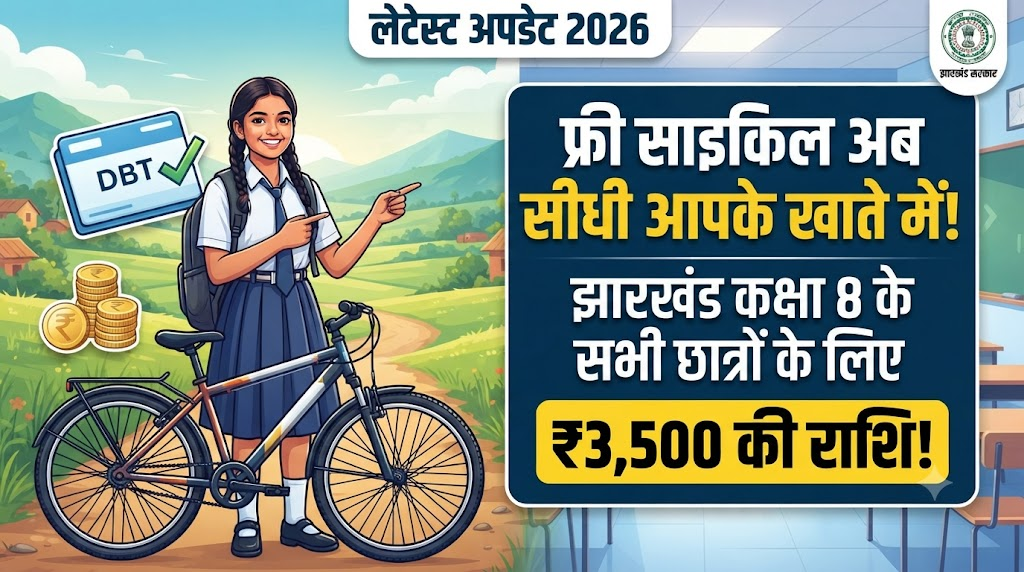
By empowering students with a bicycle and moving toward e-cycles in 2026 the government aims to ensure that no child’s dream is cut short by the lack of transportation. This scheme serves as a vital tool for promoting gender equality and inclusive education, ensuring that students from all social backgrounds can reach their classrooms comfortably and on time.
Mukhyamantri Sukhad Rahat Yojana 2026 List: Status Check & Eligible Farmer Beneficiary Process
Overview of the Scheme
The following table provides a concise summary of the key features of the bicycle distribution initiative for students in Jharkhand.
| Feature | Details |
| Scheme Name | Jharkhand School Student Cycle Yojana |
| Primary Beneficiaries | Class 8 students in Government schools |
| Objective | Reduce dropout rates and improve school attendance |
| Benefit Type | Financial Assistance (DBT) / E-cycle distribution (New 2026 directive) |
| Target Audience | ST, SC, Minority, and Backward Class students |
| Mode of Disbursement | Direct Benefit Transfer (DBT) to bank accounts |
| Governance | Welfare, School Education, and Industry Departments |
Core Objectives of the Program
The primary mission of this scheme goes beyond the simple distribution of bicycles. It is a strategic intervention aimed at the socio-economic development of Jharkhand’s youth. By reducing the physical barriers to education, the program targets a significant reduction in the school dropout rate, specifically among students transitioning from middle school (Class 8) to high school. It also encourages a culture of punctuality and independence among students, allowing them to manage their time better and focus on their academic pursuits rather than the logistics of commuting. Furthermore, the initiative acts as a safety net, ensuring that students from economically weaker sections do not have to struggle with public transport or long walks, which are often the primary reasons for absenteeism.
Eligibility Criteria for Students
To ensure that the benefits reach the most deserving candidates, the government has set specific eligibility standards. These criteria are designed to support students who face the greatest challenges in reaching their schools:
- Enrollment: The applicant must be a bonafide student currently studying in Class 8 in a government-recognized school.
- Academic Standing: Regular attendance in school is mandatory to remain eligible for the scheme.
- Residential Status: The student must be a permanent resident of Jharkhand.
- Inclusion: The scheme is open to students across specific categories, including Scheduled Tribes (ST), Scheduled Castes (SC), Minorities, and Other Backward Classes (OBC).
- Previous Benefits: Students who have already received a cycle through any other government scheme in previous years may not be eligible for a fresh grant.
Understanding the Transition to E-Cycles
As of mid-2026, the Jharkhand government, under the leadership of Chief Minister Hemant Soren, has initiated a shift in policy. Recognizing the terrain challenges in remote and inaccessible regions, there is a directive to replace conventional bicycles with e-cycles for students. This move is coordinated by the Welfare, School Education, and Industry Departments. The transition aims to improve accessibility significantly, allowing students to navigate hilly or rugged terrains with much less physical fatigue, thereby ensuring they arrive at school in a condition ready to learn.
Financial Assistance (DBT) Process
The government has historically utilized a Direct Benefit Transfer (DBT) model to provide financial assistance, typically around ₹3,500, directly into the student’s bank account. This model ensures transparency and eliminates the inefficiencies of physical procurement.
- Fund Utilization: The amount is strictly intended for the purchase of a bicycle (or towards an e-cycle).
- Account Linking: It is mandatory for the student to have an active bank account linked with their Aadhaar number to receive the funds without technical delays.
- Audit Trail: Schools are responsible for verifying the purchase to ensure the funds are not diverted for other personal or household expenses.
Documentation Required for Application
To facilitate the disbursement of the grant, students must ensure they have accurate documentation. The following documents are typically required during the verification process at the school level:
- Student Aadhaar Card: Mandatory for DBT verification.
- Caste/Category Certificate: Required to confirm eligibility under ST, SC, Minority, or OBC quotas.
- Bank Account Details: A functional bank account (preferably linked with Aadhaar) in the student’s name or a joint account with a parent.
- Bonafide Student Certificate: Issued by the school principal confirming current enrollment in Class 8.
- Residential Proof: A domicile certificate to establish residency in Jharkhand.
- Passport Size Photographs: Recent photographs for school records and application forms.
How to Apply for the Scheme
The application process is largely school-driven, minimizing the burden on students to navigate complex portals.
- Consult School Authorities: Contact your class teacher or the school office to inquire about the current year’s application window.
- Submission of Documents: Fill out the required application forms provided by the school and attach the necessary documents.
- Verification: The school administration verifies the student’s attendance and eligibility.
- Data Upload: The school uploads the verified student data to the state government’s education portal.
- Disbursement: Once approved, the funds are credited directly to the bank account provided in the application.
Impact on School Dropout Rates
The long-term impact of this scheme has been profound. By removing the “distance factor,” the government has observed a marked increase in the transition rate from Class 8 to Class 9. Many students, especially those living in rural hilly regions, often found it impossible to cover distances of 5-10 kilometers on foot daily. The cycle (and now the potential for e-cycles) provides a reliable mode of transport, leading to better attendance and, consequently, better academic results. This intervention has been particularly effective in empowering female students, who are historically more vulnerable to dropping out due to safety and travel concerns.
Monitoring and Implementation
The implementation is overseen by the Department of School Education and Literacy, Government of Jharkhand. District Welfare Officers and School Principals play a critical role in ensuring that the funds are used for the intended purpose. Regular audits and reviews are conducted to verify that the student received the benefit and that the funds were not misappropriated. This rigorous monitoring system ensures that the scheme remains accountable and continues to serve its intended beneficiaries effectively throughout the state.
Role of Schools in the Process
Schools are the backbone of this scheme. Since the primary target is Class 8 students, school principals and nodal teachers act as the primary facilitators. They are responsible for:
- Identifying eligible students based on school records.
- Guiding parents on how to open and link bank accounts for DBT.
- Ensuring timely submission of data to the government portals.
- Resolving issues related to pending payments or documentation errors.
- Creating awareness among parents about the importance of using the money exclusively for a bicycle purchase.
Important Safety Guidelines for Parents
When purchasing a bicycle or utilizing the government grant, parents should keep certain quality and safety parameters in mind:
- Quality Check: Ensure the bicycle is from a reputable manufacturer and meets safety standards (ISI/ISO certified).
- Terrain Suitability: Choose a model that is suitable for the local terrain, particularly if the student has to navigate rough or rural roads.
- Maintenance: Regularly check brakes, tires, and chains to ensure the student’s safety.
- Visibility: Ensure the bicycle is equipped with reflectors, especially if the student has to travel during early morning or evening hours.
Challenges and Future Prospects
While the scheme has been largely successful, challenges such as delays in fund release or documentation errors in bank accounts persist. However, the government is continuously working to digitize the process. The shift toward e-cycles is a significant future prospect that could revolutionize how students in remote areas access education. The ultimate goal is to evolve the scheme into a comprehensive support system that ensures every student has the resources to complete their secondary and higher secondary education.
Comparison: Physical Cycle vs. Cash DBT vs. E-Cycle
The evolving nature of the scheme shows a clear trend toward higher efficiency.
| Feature | Physical Distribution | Cash (DBT) | E-Cycle (Future) |
| Convenience | Low (Logistics) | High (Direct) | Very High (Terrain aid) |
| Control | Limited | High (User Choice) | High (Standardized) |
| Transparency | Moderate | Very High | Very High |
| Suitability | General | General | Difficult Terrain |
Important Links and Resources
To stay updated on the latest notifications and guidelines regarding the scheme, students and parents can refer to the following official sources:
- Jharkhand Education Portal: https://education.jharkhand.gov.in/
- Jharkhand Government Schemes: https://jharkhand.mygov.in/
- Official Notifications: Visit the official website of the Welfare Department, Government of Jharkhand.
- District Welfare Office: Contact your local District Welfare Officer for status inquiries regarding specific school allotments.
Frequently Asked Questions (FAQs)
1. Is this scheme only for girls?
No, the scheme is open to all eligible students (boys and girls) studying in Class 8 of government schools who meet the category and residency criteria.
2. Can students in private schools apply?
No, the scheme is restricted to students enrolled in government-recognized schools as per the state welfare guidelines.
3. Do I need a caste certificate to apply?
Yes, a valid caste certificate is mandatory to verify the student’s category (ST, SC, Minority, or OBC) for database and eligibility purposes.
4. What if my bank account is not linked to Aadhaar?
The DBT process will likely fail. It is crucial to link your bank account with your Aadhaar number before the disbursement date to avoid payment delays.
5. Can I receive the benefit twice?
No, the scheme is a one-time benefit provided specifically to students in Class 8.
6. How much money is provided?
The amount is typically around ₹3,500, though this is subject to revision based on the government’s current budget and the transition to e-cycles.
7. Where can I complain if I don’t receive the money?
You should report the matter to your School Principal or the Block Education Officer (BEO).
8. Are APL and BPL both eligible?
The scheme is primarily focused on social categories; however, you should verify current local norms with the school administration regarding income criteria.
9. Is the cycle purchase mandatory?
The funds are provided specifically for the purchase of a bicycle (or e-cycle). Schools may conduct verification to ensure the benefit is used correctly.
10. When will the e-cycle distribution start?
The e-cycle distribution is a recent 2026 directive; please consult your school or local welfare office for the rollout schedule in your specific district.