The Government of Haryana has set a unique milestone in social welfare by introducing a pioneering security net for single individuals. Known officially as the Financial Assistance to Widower and Unmarried Persons Scheme, this program targets a demographic that traditionally falls outside conventional pension frameworks. Managed by the Directorate of Social Justice and Empowerment, Haryana, the scheme ensures that individuals without a spouse can sustain themselves with dignity.
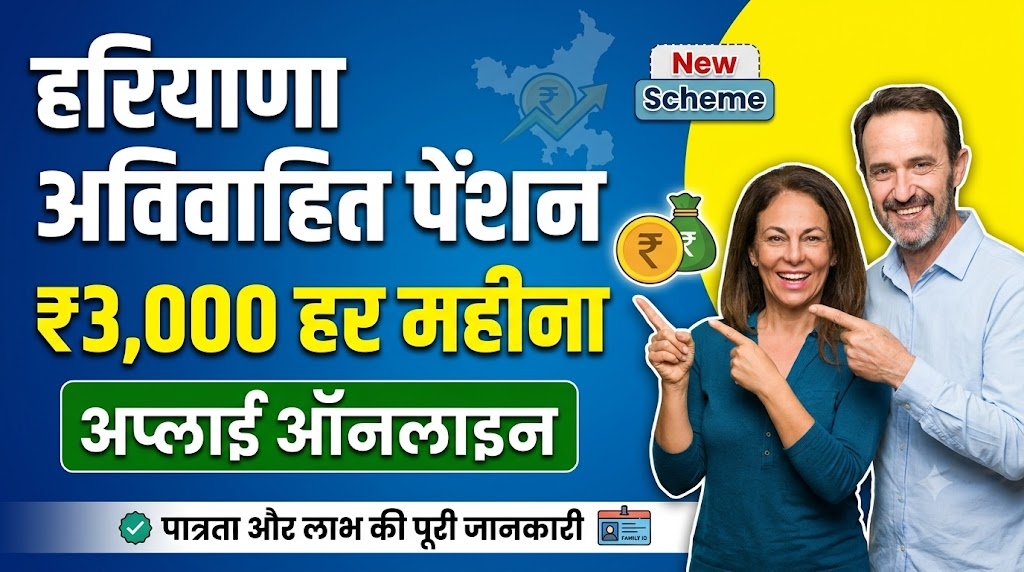
It addresses the economic vulnerabilities faced by single citizens who lack extensive family security structures or multi-income households. By providing regular financial aid, the state aims to cut down dependency on distant relatives and improve the self-reliance of individuals during their crucial late-middle years.
Telangana 2BHK Housing Scheme 4th Phase Beneficiary List & Online Application Guide
Quick Scheme Overview and Highlights
To give website visitors a snapshot of the programmatic structure, this section presents the core structural data at a glance. It outlines exactly who manages the initiative, how much money is sent out monthly, and who can apply.
| Key Feature | Scheme Specifics |
| Scheme Name | Financial Assistance to Widower and Unmarried Persons Scheme (Unmarried Pension) |
| State | Haryana, India |
| Nodal Department | Department of Social Justice, Empowerment, Welfare of SCs & BCs and Antyodaya (SEWA) |
| Monthly Pension Amount | ₹3,000 per month (Updated rate) |
| Target Age Bracket | 45 years to 60 years |
| Income Threshold | Annual family income up to ₹1,80,000 (verified via PPP) |
| Primary Integration | Parivar Pehchan Patra (Family ID) Portal |
| Application Mode | Online via Antyodaya Saral Portal / Auto-selection via PPP |
Objective Behind the Unmarried Pension Initiative
The primary driving force behind this welfare model is structural social justice.
- Economic Security: Provides an independent stream of income to meet daily medical, dietary, and personal expenses.
- Social Dignity: Empowers single individuals, eliminating the social stigma or helplessness associated with financial dependency.
- Targeted Focus: Fills the gap for individuals aged 45 to 60 who are too young for the senior citizen pension but lack active family support.
- Proactive Governance: Leverages data-driven selection to reach the most economically depressed segments directly without bureaucratic red tape.
Exact Monthly Pension Amount and Financial Benefits
Eligible beneficiaries under the unmarried category receive a fixed monthly stipend transferred directly to their bank accounts.
- The current disbursement rate is set at ₹3,000 per month.
- The pension is paid out monthly through the Direct Benefit Transfer (DBT) framework to ensure zero leakages.
- The assistance continues seamlessly until the beneficiary completes 60 years of age.
- Upon reaching the age of 60, the beneficiary is automatically transitioned into the Old Age Samman Allowance Scheme, eliminating the need to re-apply from scratch.
Detailed Eligibility Criteria for Unmarried Applicants
To maintain absolute clarity for your portal visitors, the strict criteria established by the Department of SEWA are detailed below:
- Marital Status: The applicant must be strictly unmarried. Individuals who are divorced or living in a live-in relationship are explicitly excluded from this specific sub-category.
- Age Limit: The applicant must have attained a minimum age of 45 years and must be under 60 years of age.
- Residential Domicile: The individual must be a legal domicile of Haryana and must have been residing in the state for at least 1 year at the time of application submission.
- Income Cap: The cumulative annual family income from all sources must not exceed ₹1,80,000. This income must be officially verified by the Haryana Parivar Pehchan Authority (HPPA).
Mandatory Documents Required for Application
When preparing to apply online or via a public service center, citizens must keep an explicit set of documents ready.
- Parivar Pehchan Patra (Family ID): The absolute foundational document required for identification and income verification.
- Aadhaar Card: Mandatorily linked with the applicant’s active mobile number for biometric and e-KYC validations.
- Age Proof Certificate: School leaving certificate, birth certificate, or a verified age assessment report from the state health department.
- Domicile Certificate: Official proof of residency in Haryana.
- Income Certificate: Verified income status recorded in the Family ID database or issued by an authorized revenue official.
- Bank Passbook: A copy of the bank passbook displaying the IFSC code and account number, which must be uniquely seeded with Aadhaar.
The Critical Role of Parivar Pehchan Patra (Family ID)
The entire delivery architecture of the Haryana Unmarried Pension relies entirely on the Parivar Pehchan Patra (PPP) framework.
- Data Source: The state government utilizes the data verified by the Haryana Parivar Pehchan Authority to identify citizens hitting the 45-year age milestone.
- Income Check: The annual income ceiling of ₹1.80 lakh is checked directly against the verified family data in the PPP registry.
- Automatic Flagging: The portal flags eligible single individuals automatically, minimizing the need for manual paperwork and frequent visits to administrative offices.
- Grievance Redressal: If a citizen’s marital status or income is incorrectly updated in their PPP, they must first correct it via the PPP correction portal to become eligible.
Step-by-Step Online Application Process
If an eligible citizen’s name is not automatically pulled via the PPP data-matching system, they can initiate an online application through the following method:
- Visit the official Antyodaya Saral Portal or head to the nearest Common Service Centre (CSC) / Saral Kendra.
- Log into the system using the citizen credentials or through the operator assist terminal.
- Select the service titled “Financial Assistance to Widower and Unmarried Persons Scheme”.
- Enter the unique Parivar Pehchan Patra (Family ID) when prompted. This will auto-populate the member details on screen.
- Select the specific unmarried family member from the list and complete the OTP verification sent to the registered mobile number.
- Upload the clean, scanned PDF copies of the mandatory age and residence certificates.
- Preview the digital application form, verify the seeded bank details, and submit to generate a Saral Acknowledgement ID for tracking.
Verification Workflow and Approval Stages
Once submitted, the application goes through a multi-tiered administrative validation track before the pension is formally approved:
- Stage 1 – Digital Screening: The system checks the basic entry parameters against the live HPPA database.
- Stage 2 – Local Committee Verification: A field verification may be conducted by local revenue or social welfare officials to confirm the unmarried status and living conditions.
- Stage 3 – District Social Welfare Officer (DSWO) Review: The application folder moves to the office of the concerned DSWO for final administrative check.
- Stage 4 – Formal Sanction: Upon successful verification, a formal sanction order is generated, adding the individual to the active beneficiary master list.
Disqualification Criteria and Exclusions
It is highly critical for your readers to know what conditions will cause an immediate rejection or cancellation of the financial aid:
- Alternative Government Pensions: If the applicant is already drawing any other state or central pension (such as Disability Pension or Ladli Social Security Allowance), they cannot claim this benefit.
- Income Upgrades: If the verified family income rises above the threshold of ₹1,80,000 per annum during routine audits, the pension stops.
- Change in Marital Status: If the beneficiary gets married after the pension is sanctioned, they must inform the department, and the assistance will be terminated.
- Government Service: Individuals who are employed in government sectors, autonomous bodies, or receiving an official government annuity are excluded.
Tracking Application Status and Beneficiary List
Citizens can easily monitor the progress of their submitted files without visiting government offices physically:
- Open the official Saral Haryana portal tracking page.
- Enter the Unique Saral ID or Application Reference Number received during submission.
- Click on the “Check Status” tab to view the live processing state of the file.
- To check the names in the active pension list, citizens can visit the web portal of the Department of Social Justice and check the district-wise beneficiary ledger.
Grievance Redressal and Helpline Contacts
If an application is wrongfully rejected, or if there is a long delay in payment processing, citizens can use the official grievance systems:
- Saral Helpline Number: 0172-3968400 (Available during standard working hours for immediate application tracking help).
- Departmental Support Line: 0172-2715090.
- PPP Grievance Portal: For issues relating to incorrect income or marital tags in the Family ID system, complaints must be registered directly on the Parivar Pehchan Patra portal under the grievance menu.
Comparative View: Unmarried vs. Widower Pension Segments
Though both categories are covered under the same umbrella notification of 2023, the rules vary slightly between unmarried individuals and widowers.
| Metric | Unmarried Persons Segment | Widower Persons Segment |
| Minimum Age Requirement | 45 Years Complete | 40 Years Complete |
| Annual Family Income Cap | Up to ₹1,80,000 | Up to ₹3,000,000 (3 Lakhs) |
| Gender Eligibility | Both Male and Female | Strictly Male (who lost their spouse) |
| Core Documentation | Unmarried declaration via PPP | Death Certificate of Spouse + PPP |
Important Web Links and Document Notifications
To provide maximum utility to your website visitors, here are the direct official pathways and administrative files:
- Official Department Portal: Directorate of Social Justice & Empowerment, Haryana
- Online Application Engine: Antyodaya Saral Portal Haryana
- Official Scheme Framework Page: [Direct Scheme Dashboard Link](https://socialjusticehry.gov.in/financial-assistance-to-widower and-unmarried-persons-scheme-2023/)
- Official PDF Notification Download: Citizens can access the gazette guidelines directly via the Official Notifications Repository to check the complete rule text and amendment records.
Frequently Asked Questions
What is the exact age requirement for an unmarried person to get this pension?
An unmarried individual (whether male or female) must be between 45 and 60 years of age to claim the pension.
Can a divorced person apply under the unmarried category?
No. Legally divorced individuals or citizens in live-in relationships are explicitly excluded from the unmarried pension benefits.
What happens to the pension when the beneficiary turns 60?
The monthly cash benefit does not stop. The beneficiary is automatically shifted to the Old Age Samman Allowance scheme.
Is there any application fee for registering online?
No. The application registration process across government portals like Saral Haryana is entirely free of cost.
Can I apply if my family income is ₹2,00,000 per year?
No. The absolute upper boundary for annual family income is strictly capped at ₹1,80,000.
How is the income verified under this scheme?
The income status is verified digitally using the local committee database of the Parivar Pehchan Patra (Family ID).
Can someone receiving a disability pension also get the unmarried pension?
No. The scheme guidelines prohibit drawing two different social welfare pensions simultaneously.
What should I do if my marital status is wrong in my Family ID?
You must log in to the official PPP portal, file an explicit data correction request, and get your marital status updated through the local authority.
Is a physical verification mandatory for this scheme?
Yes. The local field committees frequently cross-verify structural data to ensure the applicant stays unmarried and resides at the given address.
How much time does it take for the pension to get approved?
The typical administrative turnaround time for review, verification, and final sanction ranges from 30 to 60 days.